Welcome to OpenWheelAmerica.com.

Follow us on Twitter @christopherlion or @OpnWhlAmerica
All images provided courtesy of the IndyCar Media site.
Showing posts with label 2012 IndyCar Series. Show all posts

Thursday, November 18, 2010

Lotus Steps Up For 2012


The addition of Chevrolet to the 2012 IZOD IndyCar Series engine manufacturer lineup was a monumental revitalizing moment in the series' history, bringing back engine competition to the sport for the first time since 2005 and exciting plenty of fans along the way.

But if Chevrolet's announcement last week planted a seed, consider today's announcement one that asserts the series fully in bloom.

Group Lotus, which has recently announced the rapid expansion of its motorsports programs and had already been planning on an IndyCar aero kit for 2012, chose the night before the public opening of this year's Los Angeles Auto Show to announce their foray into IndyCar engine production. Group Lotus CEO Dany Bahar, IndyCar CEO Randy Bernard, and 1963 Indianapolis 500 winner Parnelli Jones were among those in attendance.

A longtime Formula 1 competitor, Lotus debuted their rear-engined, Ford-powered cars at Indianapolis in 1963, where they finished second to Jones with driver Jim Clark. Clark won the Indianapolis 500 in 1965 with the car, although Lotus pulled out a relatively short time later. The brand returned to the sport this year, backing Takuma Sato's effort with KV Racing Technology.

Specs on the engine were not yet released, suggesting the brand may look to ally with another company, or even still be mulling its own engine design.

While KVRT partner Kevin Kalkhoven owns Cosworth, a longtime IndyCar engine builder with a dozen Indy 500 wins, and Fords powered the Lotus Indy entries of the past, representatives from no other engine suppliers were present at the announcement. If Lotus goes its own route, it may open the door for Cosworth to produce an Alfa Romeo powerplant, as has been rumored in recent days.

Sunday, November 14, 2010

2012 Engine Deadline Fast Approaching


Tony Cotman, the man entrusted with the development of the new car formula for the IZOD IndyCar Series in 2012 and beyond, released his monthly update on engineering progress to RACER magazine.

Unfortunately, the article is not optimistic on further engine announcements for the 2012 season.

Cotman reiterated a November 16 deadline for manufacturers to confirm participation in the first season of the new formula. Right now, Honda and Chevrolet are the only two who are involved in engine development. In effect, any deal for the 2012 season would have to be confirmed over the weekend, signed, and announced with about a 48 hour turnaround.

Cotman did mention about three or four potential deals that had been in the works for a while, of which he suggested Chevrolet was not one. The Chevrolet deal only came together very recently, he said. Initially, rumors had been suggesting Ford, Cosworth, Mazda, Lotus, and Alfa Romeo as potential suppliers.

The Chevrolet deal puts the pressure on Ford to join the series, for which it has never been a factory supplier of engines. Fords have not competed in IndyCar since 1996, the first year of the Indy Racing League, when the cars were older CART models. That year, a Ford engine won its eighth Indianapolis 500, with Buddy Lazier behind the wheel. Ford did remain in CART and Champ Car until the middle of the decade, when it dropped its badging of the series' Cosworth engines.

Lotus has been mentioned as a candidate based on their relationship with KV Racing Technology, whose part-owner Kevin Kalkhoven is the owner of Cosworth. Lotus and Cosworth have had a relationship before. However, Mazda also works with Cosworth in other series, and another rumor that has taken off as of late suggests that Cosworth will partner with Alfa Romeo - or even provide the same engine to multiple teams with different badging.

Thursday, November 11, 2010

Chevrolet-IndyCar Announcement Imminent


IndyCar has scheduled an announcement at the Indianapolis Motor Speedway on Friday at 10:00 AM Eastern time regarding manufacturer competition in the IZOD IndyCar Series for 2012 and beyond.

This announcement will be a confirmation of Chevrolet's re-entry into the sport, a rumor buzzing around the sport's blogosphere since last week. The famed engine manufacturer exited the series in 2005 after a four-year run that yielded 18 victories and the 2002 championship with Sam Hornish Jr.

The rumors also suggest that, during the 15-minute announcement, Chevrolet will announce alliances with Roger Penske and Ilmor Engineering for 2012 and beyond. Ilmor will produce the 2.2-liter V6 engines for Chevrolet, and Penske will be the brand's top owner, after rumors of an alliance with Chip Ganassi were shot down.

Team Penske was a champion of Chevrolet power in CART in the late 1980s and early 1990s, as the Chevy Indy V8 won every Indianapolis 500 from 1988 to 1993. When the brand left the sport after 1993, engine builder Ilmor continued to build the engines with a Mercedes-Benz nameplate.

Ilmor eventually evolved into Mercedes' high-performance engine division, but founder Mario Ilien and Penske re-established part of the company in 2005 to build engines for Honda. But Honda Performance Development appears likely to build their own IndyCar engines under the new formula, which calls for nothing larger than a turbocharged 2.4-liter V6.

Sunday, November 7, 2010

Chevrolet to Make IndyCar Return in 2012?


Rumors have swirled around the IndyCar blogosphere today that Chevrolet, as part of a major recommitment to motorsports by parent company General Motors in 2011 and beyond, will return to the IZOD IndyCar Series in 2012 with a V6 engine to compete with Honda.

The announcement will supposedly be made on Friday, November 12, and also includes expanded GM commitments to sports car and drag racing.

Chevrolet withdrew from IndyCar in 2005, taking its last win at Texas in June of that year with Tomas Scheckter.

The marque replaced Oldsmobile in 2002 as GM's brand of choice in the series, taking all but one win in that season. But as the larger-budgeted Honda and Toyota programs shifted over from CART, Chevrolet engines were rendered increasingly uncompetitive, until the unthinkable - a partnership with longtime Ford engine supplier Cosworth - occurred in 2005. All in all, Chevrolet engines won 18 IndyCar races, although only four came from 2003-05.

Panther Racing carried the torch for Chevrolet initially, winning the 2002 championship with Sam Hornish Jr. on Chevrolet power. But this time around, if the buzz is to be believed, the leader of the bowtie brigade will be Chip Ganassi, who won NASCAR's two biggest races - the Daytona 500 and Brickyard 400 - with Chevrolet power this year.

But Ganassi was not high on the food chain with GM in NASCAR; Hendrick Motorsports, Richard Childress Racing, and Stewart-Haas Racing are among the more notable Chevrolet teams in that series. Rival manufacturer Ford swooped in with a lucrative offer, intent on making Earnhardt-Ganassi Racing their number two team.

According to reports, Ganassi had intended to sign with Ford until learning of GM's commitment to go back to Indianapolis in 2012. As open-wheel racing has always been Ganassi's bread and butter, he reconsidered.

Nothing has been confirmed as of yet. In particular, IndyCar CEO Randy Bernard called the news "pure speculation." Though it is standard practice not to confirm any big deals such as this before their official announcement, the tone of Bernard's comments suggests that there may still be a long way to go before any engine deals are signed.

Thursday, September 2, 2010

Opinion: A New, Edgier IndyCar

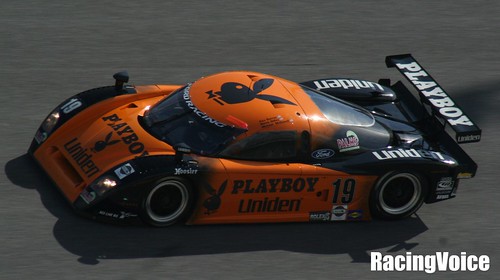
When Cameron Haven and Kimberly Phillips appeared in a Playboy.com video a couple weeks ago modeling IZOD IndyCar Series apparel, it sent the blogosphere into a titter. Some longtime series fans, especially women, objected at the nature of the video, saying it went beyond the exploitation of women that even GoDaddy.com uses in their television ads. The video was provocative indeed, with the two women baring almost everything (but nothing deemed explicit by American standards) for the camera.

And in the end, the photo shoot and video did exactly what they were designed to do: they got people talking.

Now, this wasn't the type of thing that most other major professional sports would do. Far from it. Yes, Playboy has a lengthy racing history, but they've never been allowed on a stock car; instead, much of the bunny's recent racing exploits have come in European touring cars, where sexuality is a lot less taboo, and in American sports car racing, where there is a much smaller chance of a large public outcry against the brand. Its support has almost never been detrimental to any series.

In a way, Playboy is exactly the kind of supporter that IndyCar needs at this point in time.

For one, getting IZOD and Playboy involved took IndyCar's desire to capitalize on the sex appeal of racing to a whole new level. Does anybody remember the brilliantly half-assed "Sexier Drivers" campaign? No people, no cars, just white text on a black background with the series' shield next to it. It was about as visually interesting as your everyday encyclopedia. I think you'd be hard-pressed to remember the ad campaign.

But this, on the other hand? We're not going to forget a Playboy shoot anytime soon. It was provocative without doing anything to damage outright the series' reputation. It had front-page status on Playboy.com, which is clearly no slouch of a website. And I'm sure that such exposure at least reintroduced the brand in some subconscious sense to a good amount of people.

Witness what Rally America, the United States' sanctioning body for rally car racing, has done to entrench itself in the public eye. They've painted rallying as an "extreme sport," which - although almost certainly demeaning to the European professionals - gives the sport a unique and memorable identity here in the States. It also opens up the sport for an edgier sponsor base, with all of the big four energy drinks keeping the sport afloat, much like cigarette companies did before tobacco advertising was banned.

The American way of doing rally-car racing has attracted big names to the sport. Motocross champion Travis Pastrana. DC Shoes founder Ken Block. 1999 Indianapolis 500 winner and former IndyCar champion Kenny Brack. The list goes on.

Better still, bringing rallying to events like the X Games has opened it up to a brand new, younger fan base that would have never cared about the sport otherwise. Rallycross is one of the most popular events at the X Games. People pack the Home Depot Center to watch it, year after year.

IndyCar ought to take a page out of Rally America's book, by taking a traditional form of racing and marketing it in a way that makes people perceive it as edgy.

Purists will scoff at the notion of revamping IndyCar in such a way. Some fans would like to see the roadsters of the 1950s return to the track. It'd be nice; from a pure racing standpoint, it would be the ultimate competition. But unfortunately, the Indy Racing League has painted itself into a corner where they must do everything possible to re-establish a brand that was on life support before IZOD entered the picture.

Remember that John Barnes, the owner of Panther Racing, pointed to the younger generations as the future of the IndyCar fan base. I'm 19; I know what my peers in Generations X and Y like. I may not always agree with the hottest trends myself, but I have an idea of what works.

Brands that create interesting ads - Old Spice, for example - need to be enticed into the series, by presenting them with drivers who can act as spokespersons on and off the track. I've been saying for a little while now that Graham Rahal and Old Spice would be a great fit, especially if we could get Rahal to grow his father's trademark mustache. It'd also get the series' best young American talent back on track, at a time where part of IndyCar's downward spiral is owed to European drivers bringing their own sponsors from home. American fans just can't relate to those guys quite as well.

(Not to get all jingoistic once again, but part of my criteria for these spokespeople is that they be American. It just has to be, for the reasons I've stated above. Also, I'm not really promoting the cause of American open-wheel racing, or living up to my website's name, if I'm not going to at least go to bat every once in a while for guys like J.R. Hildebrand, Ed Carpenter, Charlie Kimball, Townsend Bell, Jonathan Summerton...)

K-Swiss has also jumped into the "edgy ad" department recently, hiring actor Danny McBride to reprise his Kenny Powers character from HBO's hit comedy Eastbound and Down in a series of ads with real K-Swiss athletes. (If you don't watch the show, Powers is a washed-up ex-pitcher who's looking to regain big league glory.) In effect, as a recent Silent Pagoda post highlights, he's Paul Tracy in another sport. They're both closer to the end of their careers than the beginning, they're both intensely confident, and they both have no problem messing with you if you get in their way. An ad campaign with the two of them facing off would be gold.

Finally, all four of the energy drink brands have had an IndyCar presence in the recent past - Monster with Tracy, NOS with Dan Wheldon, Red Bull with Buddy Rice, and Rockstar with Tomas Enge. But the two sponsors that actually used to serve as primary sponsors - the latter two - have moved out of the sport entirely, with Red Bull going stock car racing and Rockstar shifting its marketing dollars into drifting. It's these brands - and their thick checkbooks - that need to be brought back into the sport.

Imagine how popular a team of Tracy and Robby Gordon would be at Indianapolis for Monster. Picture a NOS ad campaign with their two top drivers, Wheldon and NASCAR's Kyle Busch, facing off in various extreme challenges.

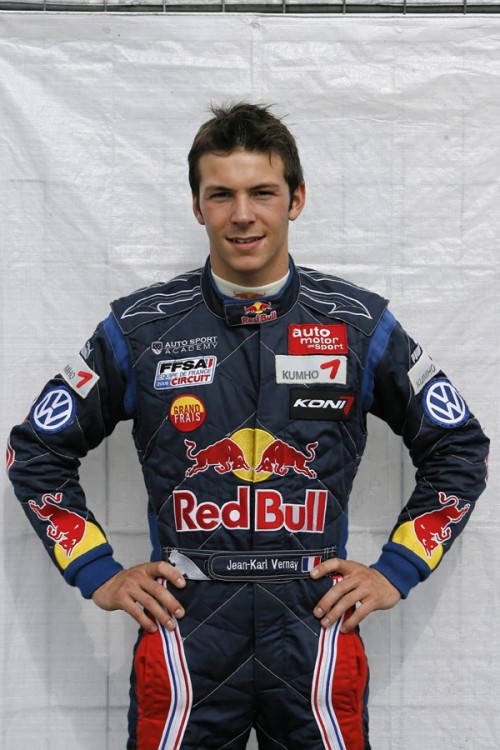
Better yet, imagine two more zany Red Bull drivers on the track for the full season. Maybe Rice is gone for good, but keep in mind how many drivers Red Bull sponsors across various forms of racing. Indy Lights leader Jean-Karl Vernay was an ex-Red Bull driver. Recent Formula 1 champion Kimi Raikkonen rallies in Europe with their backing right now. If Red Bull validated Indy Lights by giving its champion a full-time ride (sorry about this year, J.R. Hildebrand) and brought an ex-Formula 1 champion into the sport again, Nigel Mansell style, the value for IndyCar would be enormous.

This isn't even taking into consideration the brands that already have a presence in the sport. The National Guard would love to have a greater young fan base to work with, I'm sure. Racing has been an important recruiting tool for the Guard in recent years, and having more teens and young adults to recruit as a direct result of edgier brands entering the series would only help them.

Better yet, IndyCar can do this while still preserving the more "adult" brands in the sport (and no, I don't mean the Playboy kind of "adult"). Target, for example, has a potential goldmine in Dario Franchitti, especially if they can get Ashley Judd involved somehow. Will Power will need a little time to develop a stronger commercial persona for Verizon, but it can be done.

And let's be honest - the brands lending their names to engines in 2012 are not going to be the Scions and Kias of the world. They're going to be Honda, Lotus, and (if Roger Penske's alliance with Fiat Chrysler is as strong as I think it is) Alfa Romeo, returning to America after quite a while away. And BMW, while not guaranteed by any means, have alliances in sports cars and car dealerships with a handful of top open-wheel teams. Brand loyalty is important to establish at a young age, and lending their names to these IndyCars will give the younger demographic some luxury brands to aspire to in the future. (Keep in mind that IndyCar is the only American sport that can really do this, with a fan base that generally makes a comfortable salary every year and can potentially afford these vehicles.)

IndyCar needs to open itself up to those edgier brands by creating a cost-effective environment for potential sponsors, while also offering them solid spokespersons that can actually drive a racecar. The ones who are already in the sport aren't going to shy away from the larger and more coveted marketing demographic that the Red Bulls and Playboys of the world will bring in - they'll take advantage of it. After all, marketing is a business, and isn't that what business is about - taking advantage of the opportunities presented to you?

The Playboy shoot was the first step in that direction for IndyCar. Now it's time to go further.

Tuesday, August 31, 2010

Opinion: CART II the Last Thing We Need... Sort Of

In the past couple of weeks, more and more IZOD IndyCar Series owners have been expressing their displeasure with the way that things have been shaping up for the 2012 season under the watchful eye of new series CEO Randy Bernard.

They've begun to complain about the costs of a new car, wanting it to be pushed back to 2014. They don't seem to have the prerequisite amount of trust in Bernard or new car czar Tony Cotman to make the new program a success. Worst of all, they seem to feel as if they weren't really consulted on the new car program, featuring smaller engines and a Dallara "safety cell" that can be outfitted with multiple aero kits.

Fortunately, the IndyCar nation - especially the blogosphere - have called out the owners on their complaints, leading plenty of them to back off. Tony Johns at Pop Off Valve wrote, "The general consensus was that with aging inventory and stagnant technology, the series would actually die if steps were not taken to change things... I can't possibly imagine how a complete turnover for Delta Wings is any different at all from a complete turnover for the 2012 ICONIC spec - except for who is holding the political reins."

Longtime IndyCar writer and Speed Channel correspondent Robin Miller added, "It’s sad enough to think they held a new car revolt meeting at Sonoma without inviting Bernard and it’s insulting to hear supposedly intelligent racers lead a witch hunt after six months... To think he busts his ass and may not have the owners’ unanimous support is as ignorant as it is maddening. Just remember this: he’s trying to clean up the mess you’ve helped make of open wheel racing. And six months ain’t nearly enough time to find a big enough mop."

Truth be told, the owners in CART did, for a time, manage to run one of the best open-wheel series America had ever seen in the mid-1990s, at least as far as on-track product was concerned. Perhaps it just looked better by comparison to the generally second-tier fields of the early Indy Racing League, but CART at one time had all the big manufacturers, the top chassis builders in the country, most of the best open-wheel tracks in North America (and popular stops in Brazil and Australia) and a list of drivers whose pedigree is unquestioned, save by a few Formula 1 fans.

What killed that series was serial mismanagement - poor investments, the decision to take the company public, not showing up to those first IRL events in 1996 and smoking the little guys, instead of boycotting the sport's biggest race as they did for years. While it's nice to think that the people running the race teams have some idea of what works and what doesn't, the past 15 years have done little to prove this theory.

From an outsider's perspective, the only logical reason why any of the current owners would boycott the new car program is because current series partner Dallara, and not the owner-bankrolled Delta Wing, won the contract. That's a lot of Chip Ganassi's money that went for naught in the end.

The general theory is that the owners are simply complaining about where they're writing the checks. Any business owner anywhere knows that when a large turnover cost is looming in the somewhat distant future, you set aside money for it. True, IndyCar's value may be lower than ever, with a miserable television contract, threats to the TEAM compensation system, and even the great Roger Penske looking for sponsorship. But the owners did it to themselves over the past 15 years.

Bernard and Cotman can solve this easily enough by calling up Ben Bowlby at Delta Wing and asking their help in developing the new car. Heaven knows Cotman doesn't need it - the Panoz DP01 that he oversaw was one of the most beautiful open-wheel racecars to ever see an American circuit - but the political implications would be huge. At the very least, it'd shut up some of the series' power players and make them feel like they were a bit better represented in the new car development. (What, Gil de Ferran's presence in ICONIC wasn't good enough for you guys?)

But while we're on the topic of CART, it's safe to say that at least some of the things that made that series so popular during its heyday should be analyzed and brought back in time for the new car. The option for multiple engines and aero kits, if not entire chassis, is a step in that direction; it adds a visual variable to IndyCar that we haven't seen in years of spec cars and single engine manufacturers. The single safety cell and ability to switch aero kits during the season also protects teams from getting stuck with massively underperforming cars, like the Eagle-Toyotas that All American Racers fielded in 1996.

CART had, for the first few years of the split, all of the better open-wheel races, other than the Indianapolis 500. While returns to Michigan and California seem unlikely (due to ISC's ownership of those tracks... and that's even another story), plenty of the other tracks and cities on the schedule hosted popular events. Surfers Paradise produced a different winner almost every year -how's that for parity? Remember Alex Zanardi's pass in the Laguna Seca corkscrew? Portland stayed on the schedule for over 20 years for a reason, and Cleveland would be even more fun to watch if the rumored plan of a doubleheader - one race on the old airport course, one on a new airport oval course - was instituted.

Yes, every track that I just mentioned is a road course, save the potential Cleveland airport oval. IndyCar - at least the IndyCar that Tony George founded - was devised as an oval series. A lot of the IRL apologists and purists have fumed over the series' decision to add more and more twisties over the years, but with Bruton Smith and SMI getting closer and closer to IndyCar, the series' oval fate should be in good hands. Bonus points are to be had if the series can find a way to resuscitate the Milwaukee Mile, shut down this year after a promoter dispute.

We're talking a massive series overhaul in 2012 - in the cars, the tracks, and maybe even the owners, if they're not willing to back down from the idiotic stance they've taken over the past couple of weeks.

The ideal 2012 IndyCar Series won't quite be CART II, at least insofar as the owners will not be the ones calling the shots again. But if Bernard, Cotman, and the race promoters have their way, everything that made CART great - visual on-track variation, competition between both drivers and manufacturers, the best tracks in the country (within reason), a handful of foreign events in countries that produce plenty of drivers, and (let's hope) a greater base of American talent - is attainable in the next couple of years.

All everybody needs is to get on the same page.

Thursday, July 15, 2010

2012 Wish List: BMW

With new open rules for the 2012 IZOD IndyCar Series, fans all over are speculating about who will build the engines that power the next generation of IndyCars. Plenty of opinions have been voiced already, and plenty more will still come out in the coming weeks and months.

We all know Honda will be there. Lotus, too, is a likely bet, with their involvement with Cosworth (whose owner, Kevin Kalkhoven, also runs KV Racing Technology). Mazda has been mentioned by a handful of folks as a potential candidate; I wrote an article about their IndyCar potential yesterday. Ford and Chevrolet have been bandied about as returning to the sport, while Fiat and Volkswagen AG brands went deep into preliminary engine discussions that the series had within the past few years.

But in my opinion, the next brand that ought to look into the IZOD IndyCar Series is BMW.

Hold on, you say. BMW pulled out of Formula 1 after last year, is currently restructuring their junior formula series (which no longer even operates in the United States), and has never even competed in an Indianapolis 500. So what makes me think I know what I'm talking about? How does bringing this completely foreign brand into the sport make any sense, when past examples of such new programs (think Alfa Romeo and Patrick Racing in the early 1990s) have been disastrous?

What makes BMW such a solid fit for IndyCar is their relationships with current prominent team owners in different areas of motorsport. They currently provide the engines for two of the top sports car teams (in their respective classes) in all of American sports car racing: Chip Ganassi Racing's Daytona Prototype in the Rolex Sports Car Series, and Rahal Letterman Racing's pair of GT2 M3s in the American Le Mans Series. Those two teams have won three of the past seven Indianapolis 500s, and Ganassi has won the past two series championships.

I don't need to get into describing a Ganassi-BMW alliance, but the natural continuation of the Rahal-BMW alliance only makes sense. While they have mostly been involved in sports car racing as of late, everybody knows that Rahal is, first and foremost, an open-wheel team; its storied history in CART and at Indianapolis leaves little doubt of that. Bobby Rahal has been attempting to run a full-time IndyCar program for each of the past two years to no avail. If the BMW brand, which will likely maintain its connection with Rahal for the foreseeable future, was to move to IndyCar, there's almost no doubt who would get the factory sponsorship.

The same folks who own Dreyer & Reinbold Racing also own a pair of large BMW dealerships in central Indiana, making them a solid fit as well. Assuming all three of these teams maintained their relationships with the brand and continued racing at their current or potential capacities, BMW could have a stable of five to seven cars in 2012, were they to enter the series.

The driver stable would also likely be one of the best of any brand. Scott Dixon and Dario Franchitti will probably remain with Ganassi until they each retire, unless somebody has an unlikely plummet down the standings. Rahal could be blessed with the services of his son, Graham, if he continues to struggle finding sponsorship as he has this year. And DRR has made its way up the ladder in IndyCar year by year, rung by rung, to the point where it is now one of the more respected teams in the sport. With that prestige comes at least one, if not two marquee drivers, depending on the market in any given year. Though Justin Wilson may be gone, Mike Conway could develop into a top talent by 2012.

The engine itself would likely be a new creation. BMW has an existing 2.0-liter I4 that currently competes in the World Touring Car Championship, and won the 2005-07 titles with Andy Priaulx behind the wheel, but that motor is not turbocharged. While BMW does have an existing twin-turbo motor for that car, the E90, it exceeds the 2.4-liter limit that IndyCar has put in place.

Were BMW to pursue IndyCar competition with the three teams, with whom they have already established solid business and racing relationships, the results could be devastating for the rest of the series. A proper BMW effort would claim some of the best minds and drivers in the sport, and challenge for the first Indianapolis 500 win by a German automaker since Al Unser Jr. drove a Penske-prepared Mercedes to victory in 1994.

Opinion: A More Balanced Reaction to the Dallara Announcement

So we're about 30 hours removed from the groundbreaking announcement that the IZOD IndyCar Series will move to a single chassis - ahem, "safety cell," excuse me - produced by Dallara for the 2012 season and beyond. The majority of the reaction to this decision has been tempered disappointment layered with guarded optimism for the future.

Certainly, what was unveiled on Wednesday was not what most of us expected, or really wanted. The cars that we will see on track in 2012 look nothing like any of the concepts presented to us beforehand by BAT, Delta Wing, Lola, Swift, or even Dallara.

To be honest, we still don't even know what the car will look like for certain - we just have the general idea of how a handful of the parts on the safety cell will appear.

The content of the announcement was a far cry from what most of us had hoped for. Instead of the beautiful Lola chassis, one of the many innovative Swift designs, or even one of Dallara's three less groundbreaking models - or better yet, an entry from each - we don't have any definitive designs to sink our teeth into for quite a while. And that's a disappointment, to say the least.

It's especially disappointing because of how amazing some of the chassis in play would have looked. The Lola was perhaps the best-looking open wheel car since Lola's last Champ Car, which was retired at the end of 2006. It's a car that should be used in some form, by some series, somewhere in the world. Hell, even if only the Indy Lights version of the car makes it to that series, that car needs to be in competition.

The return of Dallara, and Dallara alone, also put a lot of people off. Yes, anybody who wants to design an aerodynamic kit for the car can, but it's not quite the same as a full-blown chassis war, where two or three different companies vie to produce the greatest vehicle overall for their teams. And a lot of people are sick of the same company producing the vehicle, especially when the current chassis that dominates the series has been panned by a lot of fans, particularly when Champ Car produced a new chassis in 2007 (four full years after the Dallara's introduction).

But sit on this decision for a little while, consider it more rationally, and you have perhaps the greatest move that the sport has made since Randy Bernard came on board.

By allowing anybody to design their own aerodynamic kits while only allowing Dallara to produce safety cells, the series maintains the best of both worlds: the fairness of a single unbiased supplier for the safety cell, and the innovation, visual variation, and on-track advantages that come out of different aerodynamic kits.

Any engine manufacturer looking to join the sport can now find ways to add aesthetic cues that reflect their street cars to an IndyCar, perhaps the most purpose-built racing machine in the world. (Lotus' Formula 1 head, Tony Fernandes, has already hinted that the brand may up their commitment in 2012 from their current sponsorship of Takuma Sato.) Keep in mind that one of the reasons fans flocked to NASCAR was because the cars used to resemble what we saw on the road every day; now, IndyCar has a little crack at that, too.

Let's also keep in mind what Dallara offered to maintain its relationship with IndyCar: a brand new facility in Speedway that will churn out these new safety cells. Indianapolis becomes a racing town all year once again, as the engineering schools of the Midwest (fun fact: my grandfather studied engineering in Purdue) will produce the future minds that shape the sport. The facility creates new jobs that should help rejuvenate the local economy, something that should not go without consideration.

I will concede that for all the fanfare that came with this announcement, and all of the high expectations that we the fans and writers developed on our own, we were a bit let down. But it was our own grandiose expectations and rigid mindsets that let us down. We all wanted something for the series that nobody starting from scratch could really provide us with in 2012, while still making a reasonable amount of money. As much as I hate to say it, racing is a business... a business in which my vision of Honda, Porsche, Cosworth, and BMW 3.4-liter V6s in Dallara, Lola, and Swift chassis is not quite feasible at the moment.

Once we all get over those elevated hopes, dreams, and expectations we had, I'm sure that IndyCar and Dallara will not disappoint, and we're going to see a fantastic 2012 IndyCar season. It'd just be nice to have a few more complete and concrete images and specs drawn up at this point, especially since the new car has been such a long time coming.

But alas, we shall keep waiting... and in the meantime, probably drawing up our own aero kits. Let the art project begin!

Wednesday, July 14, 2010

2012 Wish List: Mazda

Now that the specifications for engines and chassis in the 2012 IZOD IndyCar Series season have been released, manufacturers have 18 months to throw together programs before the start of that season. The current Dallara-Hondas will see a lame duck year in 2011 before giving way to brand new equipment the following year.

Dallara will now build the "IndyCar Safety Cell," which is for all intents and purposes the chassis of the car. Aerodynamic parts such as wings, sidepods, and engine cowlings, however, may be crafted by any manufacturer willing to adhere to certain league standards for cost, safety, and availability. These parts must not exceed $70,000 in cost, be open to all teams, and pass certain safety tests before the league will approve them for on-track competition.

This decision, announced today by the ICONIC committee, preserves the relative fairness of a one-chassis system, while still emphasizing aerodynamic innovation and variability. Every car on the track will likely no longer look the same, unless one manufacturer's aero kit far surpasses the rest - and even then, because teams may only use two of these packages per year, the teams that guess wrong will be stuck.

The new engines will be even more of an open-source system. ICONIC set maximum parameters of 2.4 cubic liters of displacement, six cylinders, and 700 horsepower, while also mandating that the new engines will be turbocharged. Theoretically, any engine meeting these standards can take to the track in 2012.

Honda will be back for sure, producing a brand new engine that will likely adhere to the maximum parameters. Cosworth, too, will probably be back, with the engine company co-owned by KV Racing Technology principal Kevin Kalkhoven likely producing Lotus-branded motors for KV. Ford, Chevrolet, and members of the Volkswagen and Fiat conglomerates have also been rumored at various stages of the game to be mulling the production of IndyCar engines.

One brand that stands out, however, is Mazda.

For a moment, forget about the existing Mazda racing engines, and simply consider Mazda's most recent racing involvement. They were the sole engine supplier for two feeder series, the now-defunct Atlantic Championship and the Star Mazda Championship, the latter of which currently operates under the IRL's Road to Indy banner. They sponsor the development of plenty of top young talent - recent open-wheel drivers to progress through the ranks in Mazdas include John Edwards, Adam Christodoulou, Jonathan Bomarito, Simona de Silvestro, and Conor Daly.

The first three drivers, however, have shifted their focus to sports car racing in a poor market for open-wheel development drivers. They all remain Mazda-backed, but instead of having come to IndyCar, they compete in the Rolex Sports Car Series for SpeedSource. You can bet that if the 2012 system was in place right now, and Mazda had a team established in IndyCar instead, every single one of those drivers would still be in open-wheel. Sports car racing just became a necessity when the ladder broke.

But with the new 2012 system, Mazda can bring some of its sports car folks over to IndyCar, including ex-Atlantic champions Newman Wachs Racing and longtime sports car stalwarts Dyson Racing, to give their development drivers a prestigious end to the ladder. Instead of the monetary prizes offered in past Atlantic and Star Mazda championships, the prize can be a drive for Mazda's IndyCar program. Even if the program did not win races, it could at least serve as a stepping stone for drivers within the big series to go to bigger teams, much as Will Power went from KV to Team Penske and E.J. Viso went from HVM Racing to KV.

As for the motor, there is another reason why Mazda makes a perfect fit: it already has a 2.0-liter turbocharged I4 in competition in the American Le Mans Series. While the motor, which is powered by BP isobutanol and runs in Dyson Racing's closed-cockpit LMP2, would require a handful of changes (especially in the fuel department) to work in IndyCar, it would be a cost-effective option due to the smaller amount of development work required.

A Mazda IndyCar team in 2012 would provide Edwards and Christodoulou with the means to reach their open-wheel goals, give its development drivers in lower series a goal for which to shoot, and perhaps keep Daly in America for another year before he heads off to Formula 1 as many expect. The brand seems one of the best fits for IndyCar competition in 2012, and they are certainly at the top of my personal wish list.

Dallara to Build 2012 IndyCar Chassis

At an announcement at the Indianapolis Museum of Art, the ICONIC committee announced that the 2012 IZOD IndyCar Series will feature Dallara chassis.

Dallara beat Lola, Swift, BAT, and Delta Wing for the bid.

The new chassis will feature aerodynamic body modifications. Dallara will build the monocoque, but the other chassis parts, those visible to the car on the outside, can be developed by other manufacturers. These manufacturers may range from other chassis manufacturers like those who failed in their bids, to presumptive engine manufacturers, all the way to aersopace companies like Lockheed Martin and Boeing.

In effect, this preserves some sort of equality by giving all teams the same basic car with which to start, but allowing other companies to design their own aerodynamic pieces in order to try and develop advantages. Their only limitations are safety testing, the ability for any team to use said parts, and cost limitations - up to $70,000. Teams may use two of these aerodynamic kits per season.

According to Brian Barnhart, the chassis will cost $349,000, but a complete "roller" will cost $385,000 with Dallara's standard aero kit. This is just over half the price of the current chassis. Further, Mitch Murray, governor of Indiana, also announced that the first 28 chassis ordered by Indiana-based teams (the majority of the series) will receive $150,000 discounts.

Saturday, July 10, 2010

This Week in IndyCar: July 10, 2010

A collection of news clippings from around the IZOD IndyCar Series over the past few days:

- Dreyer & Reinbold Racing, whose flagship No. 24 car has seen a revolving door of drivers since Mike Conway's Indianapolis 500 crash, may finally see its driver lineup completed for the season.

Tomas Scheckter will bring his Mona Vie sponsorship to the car for the July 18 Honda Indy Toronto, where he will make his 13th career start for the team and 112th career start overall. Scheckter finished 16th at Toronto last year. His best career road course finish is sixth, at St. Petersburg in 2007.

While Edmonton is not yet settled, J.R. Hildebrand will take over the car at Mid-Ohio and Infineon. The 2009 Firestone Indy Lights champion has been basically out of work all season, save for a bit of testing with Marco Andretti's team at Andretti Autosport. In Lights last year, he finished third at Mid-Ohio and won at Infineon, his home track.

But Conway's rehabilitation is progressing faster than many had imagined. In fact, the goal is to have him back for Infineon, where he finished an impressive third last year. If this happens, he'll slide into a third car for the team, alongside Hildebrand and Justin Wilson.

- Four days from now, the ICONIC committee will vote on the future car strategy for the IZOD IndyCar Series, and unveil it to the world at the Indianapolis Museum of Art's Tobias Theatre.

IndyCar CEO Randy Bernard has advised fans not to pay attention to any rumors regarding which manufacturer has a leg up, since the decision will not be known until that day. Three of the five manufacturer proposals - coming from BAT, Dallara, Delta Wing, Lola, and Swift - have been chosen to move forward to the end.

Whichever chassis (and there may be more than one) are on the track in 2012, they will be paired with a new engine formula that has already been settled. The new engines will feature up to 2.4 cubic liters of displacement and up to six cylinders, and will all be turbocharged.

The key word, of course, is "up to" - meaning that anything beneath those maximum stipulations is welcome. (In fact, some food for thought: Mazda, which has long been a supporter of feeder series to American open-wheel racing, currently runs a turbocharged I4 engine in the American Le Mans Series, with a 2.0 cubic liter displacement.)

Sunday, June 6, 2010

Opinion: Putting the "Open" Back in "Open Wheel"

I don't think that I'm the only person to be excited about the ICONIC committee's decision to bring turbocharged 2.4 liter V6 engines to the IZOD IndyCar Series in 2012. The new engine will be a lot smaller and lighter than the current Honda powerplant, will maintain up to 700 horsepower, and will return turbos to major American open-wheel racing for the first time since Champ Car's demise. It should also allow other engine manufacturers, potentially including one of the Volkswagen Group's brands and a Lotus-Cosworth collaboration, to join the party. All of this is excellent news.

Now the ICONIC committee turns to chassis selection, where five industry leaders are currently fighting for the single contract to produce IndyCar chassis. Three of the companies - Dallara, Lola, and Swift - have built chassis before. BAT Engineering is comprised of three men who dominated the sport in the 1980s. Delta Wing is the pet project of some of the series' biggest owners.

The problem here is that three or fourth worthy chassis designers are going to go home, while one secures a contract, keeping IndyCar in its spec-design age. But why?

When CART reached its latest peak in the mid-to-late 1990s, when entry lists were full, big names were all around, and the IRL hadn't yet lured the top teams back to Indianapolis, there were three chassis manufacturers (and Roger Penske's in-house design) battling for supremacy, as there were four engine manufacturers competing to build the best engines. The competition may have driven up costs a bit, but that's what added to the prestige of the series - you had to beat everybody else on the track, not in the bidding.

Opening up chassis production to at least two manufacturers would increase competition, and hearken back to better days in the sport, before the nasty political split had scorched much of the open-wheel earth. The series could set a cost cap on chassis development and production in order to protect its owners from the potential of escalating costs, and perhaps adjust that cap on a yearly basis, as stick-and-ball sports do with player salary caps. If nothing else, multiple chassis would make the races far more visually interesting, in a way that multiple engine companies cannot.

Allowing multiple chassis contracts will also help bring the sport's biggest and best track back to the prominence and prestige it once held. Indianapolis used to be a proving ground for new road technologies, and a breeding ground for open-wheel innovation. Think of some of the cars used in the past 40 years, and how much change has occurred, both in aerodynamics and underneath the engine cowling. The changes have been massive, and part of it came from the less restrictive rules at Indianapolis.

Remember that during the CART era of the 1980s and 90s, the Indianapolis 500 was a USAC-sanctioned race in which CART decided to award points to its teams. Because the race was not run under CART sanctioning, and thus under Indianapolis 500-specific rules, teams had the ability to experiment a little more freely with their cars. Some of the most dominating performances in all of motorsport have come due to this provision.

In 1994, Team Penske, with drivers Al Unser Jr., Paul Tracy, and Emerson Fittipaldi, had one of the most dominating combinations in open-wheel history: the Penske PC-23 chassis and Ilmor-Mercedes Indy V8 engine. This combination allowed Penske to rip off a seven-race winning streak at one points in the 16-race season, and allowed the team to take 12 victories overall. Everybody knew that coming into Indy that year, the team to beat was going to be Team Penske, especially coming off of their win the previous year with Fittipaldi.

But Penske outdid themselves at Indy, bringing along a secretly-built 209 cid pushrod Mercedes engine, the 500I. Penske utilized rules provisions that allowed pushrod engines like John Menard's Buick V6 an extra 650 cubic centimeters and 4.9 psi of boost. For those of us who aren't engineers, it meant that the engine could produce 1000 horsepower, significantly more than Penske's competitors. The team went on to dominate the race.

Randy Bernard, CEO of IndyCar, has said that he wants to bring innovation back to the series. Bernard has also proven himself willing to make some huge decisions - awarding split oval and road course championships, attempting to implement bonuses next year of $10 million for series champions and $20 million for winning both Indy and NASCAR's Coca-Cola 600 on the same day, and so on.

What about opening up the field at Indianapolis to innovation once again?

In its heyday long ago, the Indianapolis 500 was so highly regarded that it counted in Formula 1 world championship points. That won't happen again, but the race can still go a long way towards attracting racing powerhouses from across the globe by opening up its engine formula and allowing multiple chassis manufacturers to build Indy racers.

In other words, by encouraging innovation and the competition of technologies, with the assumed goal of bringing what's learned on the racetrack back to the streets, Indianapolis can recapture the prestige it used to have, years and years ago. Because let's be honest: Indianapolis still matters, but it just isn't the same.

The key difference in racing nowadays, compared to years ago, is that what's running on the track nowadays has little or no correlation to the cars that we drive on the streets. Sure, IndyCar does a lot with ethanol, but how many of us currently have ethanol-based cars? And what does an eight-year-old Dallara chassis have to do with the aerodynamics of the vehicles that any of us drive?

The reason why sports car racing flourishes in its niche is because the developments made at Le Mans have street relevance. When Peugeot and Audi battle at Circuit de la Sarthe, they're not just racing for glory. They're in it because what they learn at the track will make their performance vehicles on the road that much better. The American Le Mans Series does a fantastic job, with its embrace of multiple fuels and the Michelin Green Challenge, which awards a championship to the most efficient team over the course of the year.

By loosening restrictions on competitors in the Indianapolis 500, the sport's most prestigious race, IndyCar can push its own "green" initiative even further, by encouraging participants to develop the fastest and most efficient cars they possibly can. Only cars that meet certain standards for efficiency can attempt to qualify; as usual, the fastest 33 race. Exclusive supplier contracts be damned - let them apply to every other race of the season but Indy, because years of spec 500s is beginning to grow old.

If Chip Ganassi and Bobby Rahal want to bring the BMW motors they run in sports car racing to Indy, by all means let them. See if Duncan Dayton's Highcroft Racing can run as well with Honda at Indianapolis as they do at Sebring and Laguna Seca. Manufacturers currently on the outside looking in would have a reason to care about Indy again, and so would fair-weather motorsports fans.

It'd be the biggest and best race in the world, if only we opened it up.

Tuesday, April 13, 2010

ICONIC Committee Announced

The ICONIC (Innovative, Competitive, Open-Wheel, New, Industry-Relevant, Cost-Effective) Committee, IZOD IndyCar Series chairman Randy Bernard's committee for the 2012 IndyCar formula, was formally filled out this afternoon. Led by William Looney III, a retired 4-star Air Force General, the group is comprised of seven members, six of whom were selected by Bernard and one of whom was selected by a paddock-wide vote.

The six members chosen today were Brian Barnhardt, Tony Cotman, Eddie Gossage, Rick Long, Tony Purnell, and Neil Ressler. The seventh, Gil de Ferran, was chosen weeks ago as the owners' representative to the group.

While three of the newly-announced names (Barnhardt, Cotman, and Gossage) should be somewhat familiar to the modern IndyCar fan, the other three may not be so easily recognized. In fact, only Long has any prior IndyCar experience; he began developing engines in 1973 with the Turbo Offy program and has also worked on engines for Buick, Chevrolet, Cosworth, and Judd. He now works for Speedway Engine Development Inc., which builds engines for Firestone Indy Lights and several USAC teams.

Purnell and Ressler are former employees of the Ford Motor Company, both of whom have experience with the former Jaguar Formula 1 team. Purnell was the founder of Pi Research, a globally recognized electronics company that was purchased by Ford in 1999, while Ressler served a multitude of different roles for the company.

The committee will help decide the future of the sport, including which new formula teams will utilize, as well as whether or not it should act on a recommendation to wait until 2013 to implement the new cars.

Among the chassis manufacturers looking to score the exclusive contract are established organizations Dallara, Lola, and Swift, as well as new endeavors BAT and DeltaWing. Engine companies in discussions include Honda, Fiat (perhaps through its Alfa Romeo brand), and Volkswagen AG (through either the Volkswagen, Audi, or Porsche brand). Firestone will continue to supply tires exclusively to the series.

Friday, March 5, 2010

Fifth IndyCar Chassis Prototype Released

Bruce Ashmore, Alan Mertens, and Tim Wardrop, three of the top engineers in major American open wheel racing over the past two decades, have formed BAT Engineering with the goal of supplying chassis to the 2012 IZOD IndyCar Series.

The three have set up a blog with a press release detailing their plans and core concepts relevant to the car. They have also posted a simple computerized rendering of the chassis. The official IndyCar page on Facebook contains a photo album with more renderings.

The combined accomplishments of the three engineers are enough to fill most trophy cases. Ashmore had a hand in 11 of the 12 CART championships won between 1990 and 2001, either as chief designer of Lola (1990-1993) or president of Reynard (1995-2001). Mertens won five Indianapolis 500s from 1983 to 1987 as designer of March's IndyCar, and also designed the 1992 Indianapolis 500-winning car with Galles Racing as part of a collaboration called Galmer. Wardrop engineered the 1997 and 2000 Indy 500 wins of Arie Luyendyk and Juan Montoya, respectively, and set up Luyendyk's 1996 record-setting car.

One advantage that the design team has is the location of Ashmore's company in Gasoline Alley. IndyCar officials have expressed a preference for a car manufactured in America, preferably in the Indianapolis area. Galmer has a shop in Albuquerque, NM, which could make for an excellent secondary base.

Tuesday, March 2, 2010

Lotus Looking to IndyCar in the Present and Future

The renaissance of the Lotus brand continues as Team Lotus USA will reportedly field two cars in the 2010 IZOD IndyCar Series season.

Originally, reports suggested that Lotus would return to the Indianapolis 500 only, which they won in 1965 with Jim Clark behind the wheel. Then it appeared that the brand would back James Rossiter at KV Racing Technology. Now it appears that the brand looks to make a stronger push into American open-wheel racing.

Lotus recently announced a partnership with Cosworth to develop engines for racing based on those in its road cars. Cosworth is partially owned by Kevin Kalkhoven, the "K" in KVRT. Cosworth supplied engines exclusively for Champ Car, which was run by Kalkhoven, from the mid-2000s through the series' demise in 2008. The company also supplies the spec engine for Formula 1, which the Lotus F1 team campaigns. (It is important to note that the Lotus involved with IndyCar is the "real" Lotus, the car company itself, and not related to the F1 team that licenses its name.)

This partnership may influence the brand's participation in IndyCar in 2012. The latest rumor is that Lotus will build its own car - chassis and engine - for 2012 and beyond. Lotus, however, does not appear intent on becoming an exclusive chassis supplier to the sport, instead harkening back to the innovation of Indy 500s past, and the uniqueness of each car still seen in F1 today.

The engine, however, would likely be used by multiple teams. It would probably signal a return to the series, and the sport, for Cosworth, and perhaps use Lotus badging. KVRT would be a likely bet to run the engine for the reasons stated above; if Gerald Forsythe ever returns to the ranks of open-wheel team ownership, the other owner of Cosworth would likely use the engine too. Many of the most enduring IndyCar teams have used Cosworth engines at one point or another.

Cosworth was shut out from IndyCar in 2008 when Champ Car was bought out, and this would likely be the best way for them to return. While they did not attend more than one of IndyCar's engine spec meetings in 2008, Lotus looks to build a turbocharged V6 engine with the company - exactly the type of engine that current IndyCar supplier Honda is looking for in 2012.